
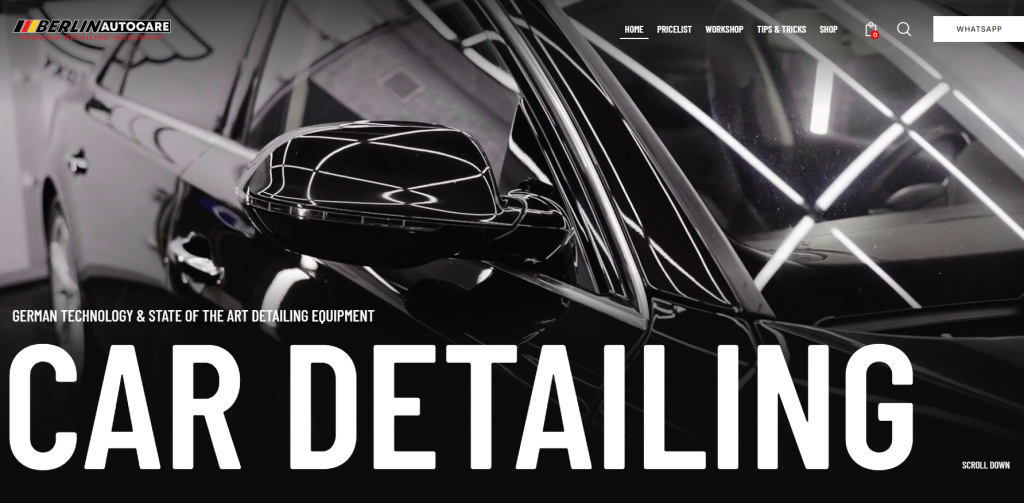
Most auto detailing blogs are built to “publish content,” not to generate leads. They get traffic—but no calls, no form fills, and no bookings.
That’s a design problem, not a content problem.
For auto detailing businesses, a blog should work like a silent salesperson. It should educate visitors, build trust, and guide them toward booking a service. In this article, we’ll break down how to design blog pages that actually turn readers into leads.
1. Start With Clear Search Intent, Not Just Topics
Before design comes intent.
Auto detailing blog visitors usually fall into three categories:
- Problem-aware (e.g., “how to remove water spots from car paint”)
- Solution-aware (e.g., “ceramic coating vs wax”)
- Service-ready (e.g., “mobile auto detailing near me”)
Your blog design should match the intent:
- Educational content at the top
- Trust-building in the middle
- Conversion prompts near decision points
A blog page should never feel disconnected from your services.
2. Above-the-Fold Design Must Sell the Service
Most blog readers decide within seconds whether to stay.
Above the fold, include:
- A clear, benefit-driven headline
- A short intro explaining why this matters
- A subtle service CTA (not aggressive)
Example CTA placements:
- “Get a Professional Detail in [City]”
- “Book a Mobile Detail Today”
This ensures visitors know you’re not just a blog—you’re a local service provider.
3. Use Strategic CTAs, Not One Generic Button
One CTA at the bottom is not enough.
High-performing auto detailing blogs use contextual CTAs:
- After explaining a problem → “We Fix This Daily”
- After comparing services → “See Our Ceramic Coating Packages”
- After giving DIY tips → “Prefer a Pro Finish?”
Effective CTA formats:
- Inline text links
- Sticky booking buttons
- Soft banner CTAs inside content
Each CTA should feel like a natural next step, not an interruption.
4. Add Local Trust Signals Inside Blog Content
Auto detailing is a local trust-based service. Your blog design should reinforce that.
Include:
- City or service-area mentions
- Before/after images from real jobs
- Short testimonials inside content
- Google rating snippets near CTAs
When readers see local proof, they’re far more likely to convert.
5. Design for Mobile-First Reading
Most auto detailing blog traffic comes from mobile devices.
Your blog design must ensure:
- Large, readable fonts
- Short paragraphs (2–3 lines max)
- Tap-friendly buttons
- No intrusive pop-ups
If your blog is hard to read on a phone, your leads disappear—no matter how good the content is.
6. Use Visual Breaks That Support Conversion
Walls of text kill engagement.
Use:
- Comparison tables (DIY vs professional)
- Bullet-point benefits
- Service highlight boxes
- Process breakdown sections
Visual structure improves readability and makes CTAs more noticeable—without being pushy.
7. Internal Linking That Moves Users Toward Booking
Most blogs waste internal links on random articles.
Instead, design your blog to funnel traffic:
- Blog → Service page
- Blog → Pricing page
- Blog → Booking page
Anchor links should be action-oriented, not generic:
- ❌ “Click here”
- ✅ “View Our Mobile Detailing Packages”
This turns informational traffic into high-intent visitors.
8. Use Exit-Intent Offers That Make Sense
Exit popups don’t have to be annoying.
For auto detailing blogs, effective offers include:
- “$25 Off First Detail”
- “Free Inspection With Booking”
- “Seasonal Detailing Checklist”
Keep forms simple:
- Name
- Phone or email
- Preferred service
This captures leads without harming user experience.
9. Speed, SEO, and UX Are Non-Negotiable
No lead-generation design works if the page is slow.
Optimize:
- Image sizes (especially before/after photos)
- Core Web Vitals
- Clean layouts with minimal scripts
Fast-loading blog pages rank better and convert better—especially for local SEO.
10. Every Blog Should End With a Clear Conversion Path
Never end a blog with “Conclusion” and nothing else.
Instead, end with:
- A short summary
- A service reminder
- A clear action step
Example:
“Reading about paint protection is helpful—but professional application makes all the difference. If you’re in [City], book a ceramic coating consultation today.”
Frequently Asked Questions (FAQs)
Can blogs really generate leads for auto detailing?
Yes—when designed correctly. Blogs attract intent-based traffic, and smart design converts that traffic into calls and bookings.
Should I gate blog content with forms?
No. Gating hurts SEO. Use soft CTAs and exit-intent offers instead.
How many CTAs should a blog have?
Typically 3–5, placed naturally throughout the content.
Do I need a custom blog design?
Not always—but templates often lack conversion logic. Strategic customization makes a big difference.
Conclusion
A blog isn’t just for SEO—it’s one of the most powerful lead-generation tools for auto detailing businesses when designed properly.
By aligning search intent, mobile UX, local trust signals, and conversion-focused CTAs, your blog pages can turn casual readers into paying customers.
If your blog brings traffic but no leads, the issue isn’t what you’re writing—it’s how your blog is designed.
Design it like a salesperson, not a textbook.