
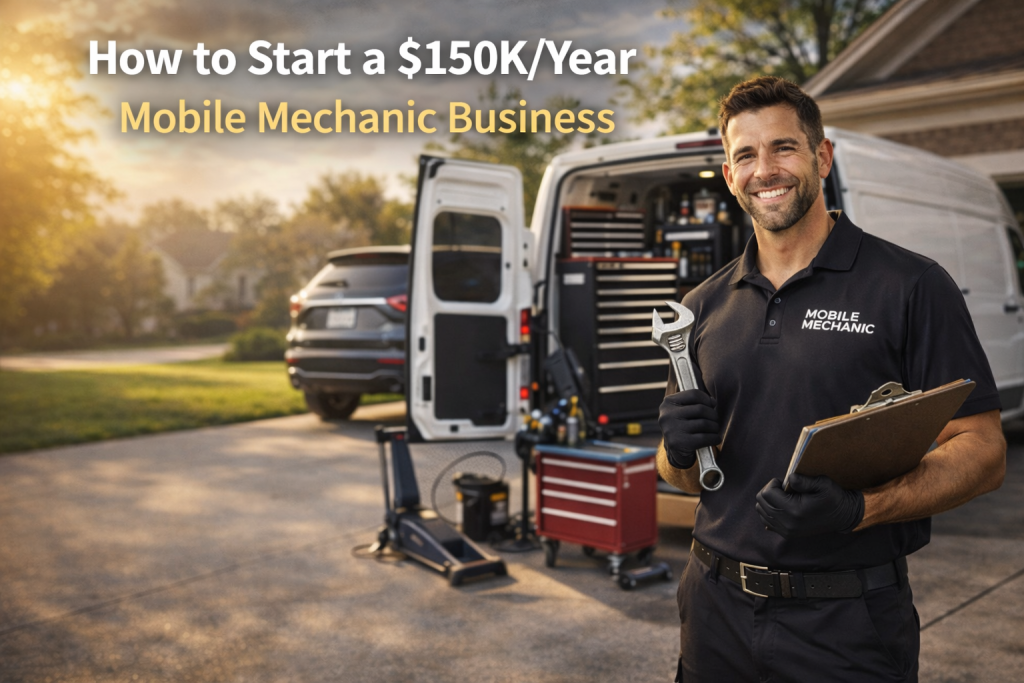
A Real-Life Blueprint from a Working Mobile Mechanic
Starting a mobile mechanic business is no longer just a side hustle—it can become a six-figure business if done correctly. This guide breaks down exactly how a real mobile mechanic built his business with the goal of earning $150,000 per year, working directly with customers, keeping overhead low, and scaling smartly.
This is not theory. This is real-world experience.
From Side Hustle to Full-Time Mobile Mechanic Business
Matthew Barney, the founder of Max Mobile Mechanics, didn’t start with a big loan or a fancy shop. He started after work, helping people fix their cars and earning extra money on the side.
At first, the motivation wasn’t just money—it was helping people. But Matthew quickly realized an important truth:
You can’t help people consistently if your business doesn’t make money.
By combining his passion for fixing cars with smart business decisions, he slowly transitioned from part-time work into a full-time mobile mechanic business.
Mechanical Experience: Building Skills Before Going Solo
Matthew didn’t wake up one day and start charging customers blindly. He spent over seven years building hands-on experience.
His journey looked like this:
- Attended automotive school to learn the fundamentals
- Started as an oil change technician
- Moved into a tire technician role
- Advanced to a used car technician, working on all makes and models
- Eventually worked at a larger dealership, focusing on Ford vehicles
Each role helped him learn faster. He didn’t stay comfortable—he stayed hungry to learn, which is critical if you want to succeed as a mobile mechanic.
Why Choose a Mobile Mechanic Business Instead of a Shop?
Opening a traditional auto repair shop requires:
- High upfront costs
- Rent or mortgage
- Utilities
- Employees
- Insurance
- Equipment
A mobile mechanic business, on the other hand, offers:
- Much lower startup costs
- Maximum flexibility
- Customer convenience
- Faster growth potential
Matthew chose mobility because customers love convenience. Instead of sitting in a waiting room, they get their car fixed at home or work—often faster and cheaper than a shop.
Startup Investments: What You Actually Need to Begin
1. A Reliable Truck
A mobile mechanic needs a work vehicle. Matthew chose a truck—not a luxury car—because practicality matters more than looks.
Even with high mileage, reliability and proper setup matter more than age.
2. Tool Storage & Organization
His truck includes:
- Bed box
- Full toolbox
- Cargo storage for deep equipment access
Organization is critical when you’re mobile. You must carry everything you need.
3. Tools & Equipment
Matthew avoids overpriced brands and uses Milwaukee tools, which offer professional quality at better prices.
Key investments include:
- Impact wrenches
- Jacks (lightweight aluminum for back safety)
- Torches and mini torches
- Power tools and batteries
A single drawer of tools can easily represent $1,000+ in value.
4. Generator & Welder (Future Upgrade)
A generator with a welder expands service offerings and increases earning potential—another smart long-term investment.
The Hidden Cost: Time and Commitment
The biggest investment wasn’t money—it was time.
Matthew spent:
- Late nights past midnight
- Long days fixing unexpected problems
- Extra hours ensuring customers were never stranded
Customer trust is built when you never leave someone stuck.
Licensing, Paperwork, and Legal Setup
To operate legally, Matthew invested in:
- State repair facility licensing
- Master Mechanic certification
- Business insurance
- Website development
- Business cards and branding
Doing things the right way builds long-term credibility and protects the business.
How a Mobile Mechanic Gets Customers (This Is Key)
1. Facebook Groups (Primary Growth Channel)
Matthew credits Facebook groups as his #1 growth driver.
He:
- Answered car-related questions daily
- Offered help instead of sales pitches
- Built trust inside local community groups
This resulted in:
- Referrals
- Repeat customers
- Word-of-mouth growth
2. Google Business Profile
Once his Google profile was live, customer inquiries increased quickly.
With 20+ reviews, Google became a steady source of leads.
3. Website & Reviews
A simple website plus consistent customer reviews helped establish authority and legitimacy.
Social Media Content That Actually Converts
Matthew posts daily Facebook content, including:
- Repair photos
- Short-form reels
- Behind-the-scenes work
These videos:
- Educate customers
- Build trust
- Act as personal reference guides for future jobs
Social media became both a marketing tool and a productivity tool.
Ongoing Business Expenses
Running a mobile mechanic business has relatively low overhead, including:
- Gas
- Business insurance
- Tool batteries
- Torch fuel
- Parts (often discounted through supplier partnerships)
Future expenses include:
- Hiring a secretary
- Payroll
- Taxes
Services Offered: From Simple Fixes to Full Engine Swaps
Matthew offers everything, including:
- Brake jobs
- Tie rods
- Spark plugs
- Batteries
- Engine replacements
One standout project included replacing an entire engine from a junkyard—despite never having done one before. Taking calculated risks helped him grow faster.
Pricing Strategy and Profit Potential
- Daily profit ranges from $150 to $800
- Goal: $500 per day
- Working 300 days = $150,000/year
- Sundays off + vacation time included
By aiming higher daily, hitting minimum goals becomes easier.
Scaling the Mobile Mechanic Business
Matthew is no longer trying to do everything himself.
Growth plans include:
- Hiring mechanics
- Hiring a secretary
- Managing scheduling and parts
- Taking a percentage of completed jobs
Long-term vision:
- 10+ mechanics
- Same-day service availability
- Custom mobile mechanic app
Pros and Cons of Being a Mobile Mechanic
Pros
- Freedom and flexibility
- No shop rent
- Better customer relationships
- Work where you want
- Wear what you want
Cons
- Customers watching closely
- Safety concerns for roadside jobs
- Need for extreme organization
The pros heavily outweigh the cons.
Three Powerful Tips for Aspiring Entrepreneurs
1. Just Start
Fear delays success. Start messy and improve.
2. Set Written Goals
Written goals become real goals. Matthew achieved every goal he put on paper.
3. Be Patient
Success doesn’t happen overnight—but consistency always wins.
Final Thoughts: Is a $150K Mobile Mechanic Business Possible?
Yes—absolutely.
With:
- Skills
- Consistent marketing
- Smart pricing
- Strong customer service
- Scalable systems
A mobile mechanic business can become a high-income, low-overhead operation with long-term freedom.